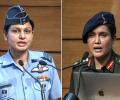
India conducted precision strikes on nine terror targets in Pakistan and Pakistan-Occupied Kashmir, targeting terrorist infrastructure to deter further attacks. The operation, codenamed 'Operation Sindoor', was detailed by two women military officers, Col Sofiya Qureshi and Wing Commander Vyomika Singh, at a press briefing in New Delhi. The officers highlighted the precise nature of the strikes, emphasizing the use of "niche technology weapons" to ensure no collateral damage. The briefing showcased India's military prowess and the growing role of women in the armed forces.

Lashkar-e-Tayiba terrorist Hilal Moulvi alias Khalid was gunned down in an encounter on Thursday morning in the in the heart of Jammu and Kashmir capital Srinagar.

2 terrorists have been identified as Tariq Ahmad Mir, resident of Zangalpora Divsar in Kulgam; and a Pakistani national Sameer Bhai alias Usman, resident of Punjab Pakistan, and an 'A' category terrorist. In another operation in Dadoora area of Pulwama district of south Kashmir, two more terrorists were killed.
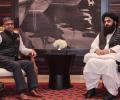
India has said it will consider engaging in development projects in Afghanistan and provide material support to the country in the health sector. The announcement came after Foreign Secretary Vikram Misri held talks with the Taliban regime's acting foreign minister Amir Khan Muttaqi in Dubai.

The National Investigation Agency (NIA) on Monday attached 17 properties of Kashmiri businessman Zahoor Ahmed Shah Watali in a terror funding case, the agency said.

Three Lashkar-e-Tayiba (LeT) terrorists were killed in an encounter with security forces in Jammu and Kashmir's Budgam district on Wednesday, the police said.
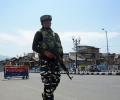
Top Lashkar-e-Tayiba (LeT) commander Nadeem Abrar, who was involved in several attacks on security forces and civilians in Kashmir, was arrested, officials said.

The Bombay High Court acquitted all 12 accused in the 2006 Mumbai train blasts case, citing a failure by the prosecution to prove their guilt and raising serious concerns about the investigation and evidence presented.
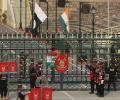
In the India-Pakistan situations, off-ramps have come either through foreign mediation (after months of kinetic warfare over Kargil, and a long stand-off with Op Parakram) or when a situation made it possible for both sides to claim a win, explains Shekhar Gupta.

Just days after his organisation was declared a terror outfit by the US, Jamaat-ud-Dawah chief Hafiz Saeed, who orchestrated the 2008 Mumbai terror attacks, addressed a seminar at the Lahore High Court spewing venom on India and America.

The incident comes two days after Jaish-e-Mohammad terrorists attacked an army camp in Sunjuwan area of Jammu, killing six people including five soldiers.
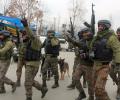
The encounter broke out in Budgam's Zolwa village late on Thursday.
An e-mail to a news channel claims it was Lashkar-e-Qahhar.
The United States on Thursday slapped sanctions on India-based terrorist group Indian Mujahideen by designating it as a Foreign Terrorist Organisation and said it has significant links with Pakistan-based groups like the Lashkar-e-Tayiba.
Pakistan-based terror outfit Lashkar-e-Tayiba is making concerted efforts to carry out attacks in the country and to develop links in Maldives and other neighbours, the government said on Tuesday.
In an interview to Rediff.com's Vicky Nanjappa, Stephen Tankel, who is currently in India to study home grown terror, talks about Headley, co-accused Tawwahur Rana and LeT founder Hafiz Saeed.

The National Investigation Agency (NIA) has started interviewing eyewitnesses, including tourists, in connection with the deadly terrorist attack in Pahalgam, south Kashmir. The attack, carried out by terrorists from the Pakistan-based Lashkar-e-Taiba (LeT), claimed the lives of 26 people on April 22. Initial investigations suggest that five to seven terrorists were involved, aided by local militants trained in Pakistan. Security forces are conducting massive operations to hunt down the terrorists in the dense jungles of the Pir Panjal range.
Stephen Tankel, author of the book Storming the World Stage: The Story of Lashkar-e-Taiba, says that the bounty announcement validates India's repeated assertions that the LeT is a dangerous group and that Saeed plays a strategic role in guiding it.

'There's a lot of sense in what Prime Minister Modi did, but the Indian government has to be really prepared for a really sharp escalation spiral.'
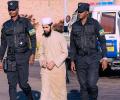
The Central Bureau of Investigation (CBI) has brought back Salman Rehman Khan, an alleged member of the Lashkar-e-Taiba, from Rwanda. Khan was wanted by the NIA for terror-related offences in Bengaluru. He was traced to Rwanda and returned to India on November 28, 2024. The return of Khan comes after similar operations in coordination with Interpol, where two other accused were brought back from Saudi Arabia.

The Lashkar-e-Tayiba, expert Stephen Tankel believes, is capable of operating on a large scale and some of its operatives have suggested that the organisation benefited in terms of recruitment following the 26/11 attacks in Mumbai.

The list in 2018 contained about 7,600 names. It has been reduced to under 3,800 in the past 18 months, according to Castellum.AI, a New York-based regulatory technology company. About 1,800 of the names have been removed since the beginning of March, according to data collected by Castellum.

An A+++ category terrorist, Dujana had taken over the reins of the Lashkar-e-Tayiba in the Kashmir Valley after the group's divisional commander Abu Qassim was killed in 2013.

The spokesperson said that Negi, a police officer who was promoted to the IPS batch of 2011, was arrested in connection with a case registered by the NIA on November 6 last year.

A government employee belonging to the Kashmir Pandit community was shot dead by suspected militants at his office in the Chadoora area of Budgam district of Jammu and Kashmir on Thursday, officials said in Srinagar.

Syed Firdaus Ashraf/Rediff.com presents the names of 10 global terrorists who, according to United Nations Security Council, are operating against India from Pakistan.
In his book Lashkar-e-Taiba, From 9/11 to Mumbai, author Stephen Tankel points out that the 60-hour terror siege on Mumbai had catapulted the LeT to international notoriety.

A civilian was also injured when terrorists opened fire on a CRPF team deployed on law and order duty at Achabal Chowk in Anantnag and escaped, the sources said.
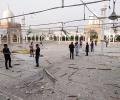
'Munir is clearly insecure and hence he needs the prop of a field marshal.'
Lashkar-e-Taiba is still active and trying its best to increase the tension between India and Pakistan, a top United Nations official mandated to monitor the Security Council sanctions against Al-Qaeda, Taliban and other terrorist groups said on Wednesday.
Two years on, memories of the bloodbath in Mumbai linger in the air.
Making provocative comments again, Jamaat-ud-Dawah chief Hafiz Muhammad Saeed has vowed to enter India through Jammu and Kashmir.

Pakistan on Friday freed Saeed, the Lashkar-e-Tayiba founder, who immediately launched his anti-India rhetoric and vowed to mobilise people for the "cause of Kashmir".

Two terrorists including a wanted Lashkar-e-Toiba ultra Salim Parray were killed in two encounters with security forces in Harwan area on the outskirts of the city on Monday, police said.

Security forces launched a cordon and search operation in the Sirhama area of Anantnag following inputs about the presence of militants there, a police official said.
A man allegedly working for terrorist outfit Lashkar-e-Tayiba was arrested by the Anti-Terrorist Squad of Mumbai police Saturday.
For Malegaon's Muslims, Rahul Gandhi's remarks were simply one more indication that the party they once supported no longer cares for them, notes Jyoti Punwani.
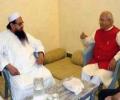
Intelligence Bureau agents tell Vicky Nanjappa/Rediff.com that Dr Ved Pratap Vaidik's meeting with terrorist Muhammad Saeed will only benefit the ISI.
Pakistan's security establishment is in a bind over evidence suggesting the Lashkar-e-Tayiba was behind the Mumbai attacks and the assault on the Sri Lankan cricket team in Lahore as it had assured Western powers after the 2001 strike on Indian Parliament that it would keep a lid on the banned group's activities.
The Lashkar-e-Tayiba is raising a group of 21 female terrorists at its training camps in Pakistan-occupied Kashmir for carrying out sabotage activities in India, army sources said on Tuesday.
